I am a Ph.D. Candidate at the University of Mannheim (Area Accounting & Taxation) and the ZEW Mannheim (Leibniz Centre for European Economic Research).
My research lies at the intersection of taxation, accounting, and public economics. I study firms' behavioral responses to policy interventions, peer effects, and tax compliance. To this end, I combine novel data sources, including data on social and economic networks, with established methods for causal identification.
In October 2026, I am going to visit Stefano Cascino at LSE.
Feel free to reach out anytime via
johannes.gaul@uni-mannheim.de.
You can find my
CV here.
Job Market Paper
Whack-a-Mole in Tax Planning: Global Regulation and Firms’ Local Responses | Paper | Abstract & Visual
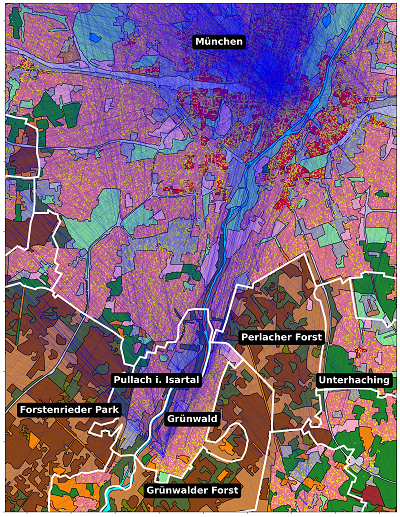
This paper examines whether multinational enterprises (MNEs) adapt to international anti-tax avoidance regulation by intensifying domestic profit shifting activities. We compile a novel dataset by geocoding firm ownership networks. This allows us to trace firm structures at international and sub-national levels and measure local exposure to global economic ties. We find that a tightening of international tax and disclosure rules in 2016 leads more strongly affected firms to intensify their existing presence in sub-national tax havens in Germany. Their presence in international tax havens remains unchanged or declines. This is consistent with modest but measurable tax revenue gains at locations that are more strongly exposed to large firms active in international tax havens, with aggregate effects of below mEUR 700 p.a. These responses indicate that the reforms were effective in constraining cross-border tax avoidance. At the same time, our findings reveal MNEs’ strategic flexibility and highlight domestic spillovers of global tax reforms.
Publications
Working Papers
OECD Pillar Two Compliance Costs: A Quantitative Assessment for EU-Headquartered Groups | Paper | Abstract & Visual
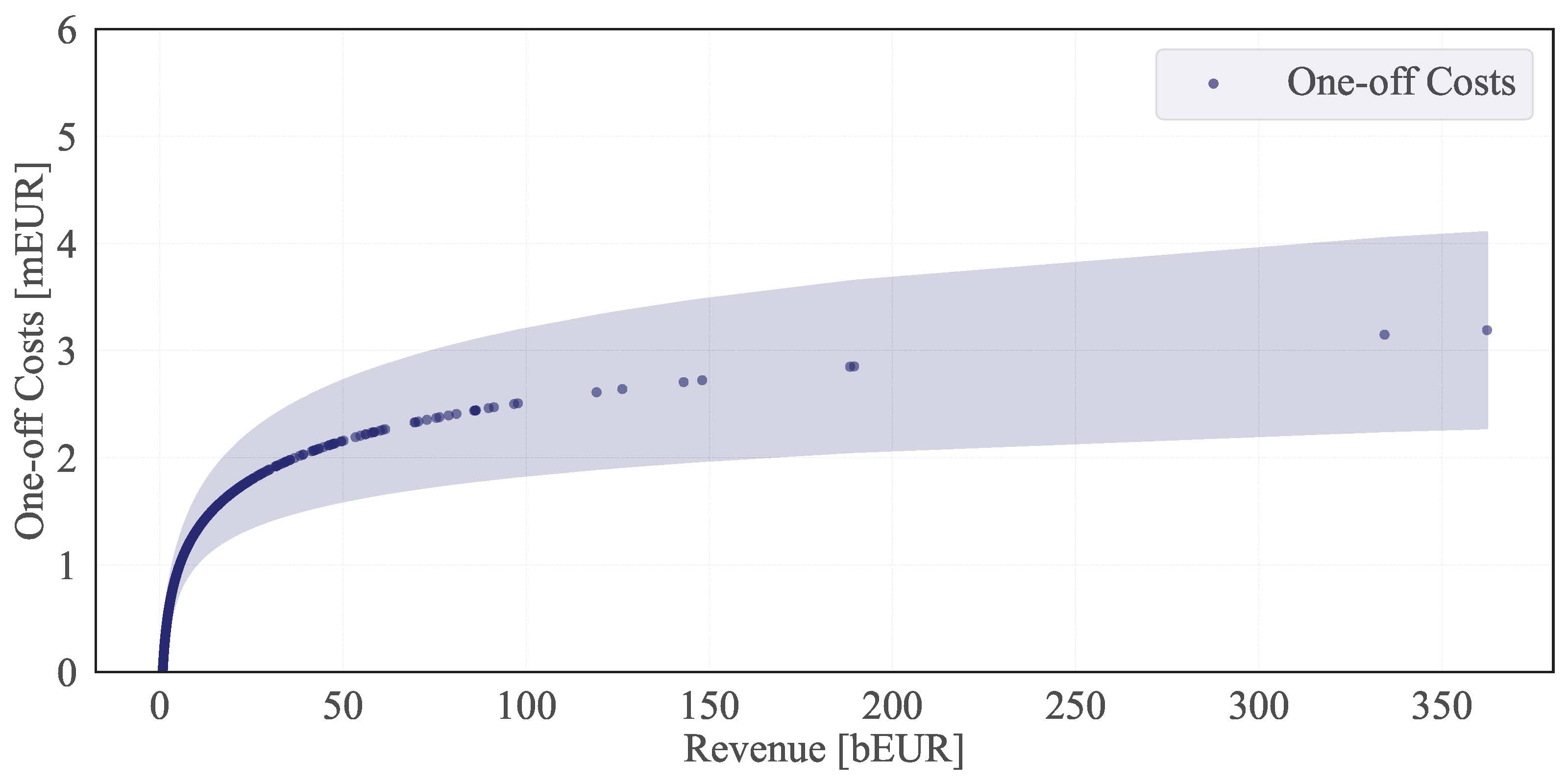
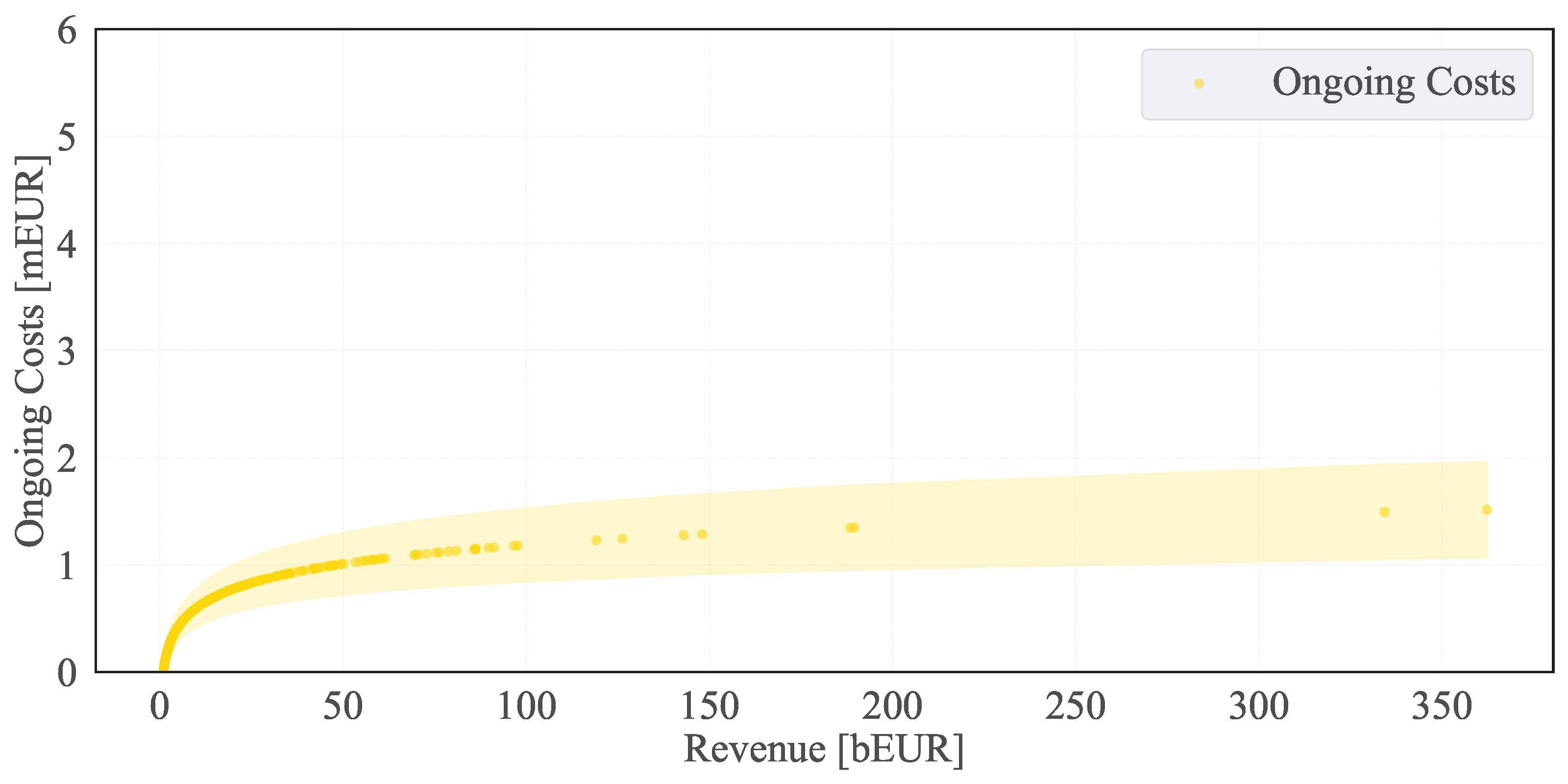
This study examines the compliance costs of OECD Pillar Two, i.e., the "Global Minimum Tax," for multinational enterprises headquartered in the European Union. Collecting data from chief financial officers and heads of finance or tax departments, we estimate compliance cost determinants and subsequently predict the overall compliance burden. Results indicate total one-off costs of about EUR 1.2 billion (up to EUR 2.0 billion) and total recurring costs of EUR 517 million p.a. (up to EUR 865 million p.a.). Our findings inform the public discourse by mitigating information asymmetries between policymakers and corporations. Moreover, we contribute by establishing a cost benchmark to facilitate a systematic cost-benefit evaluation of this policy.
Beyond Content: Investors’ Chatter, Interaction and Earnings Announcement Returns | Paper | Abstract & Visual
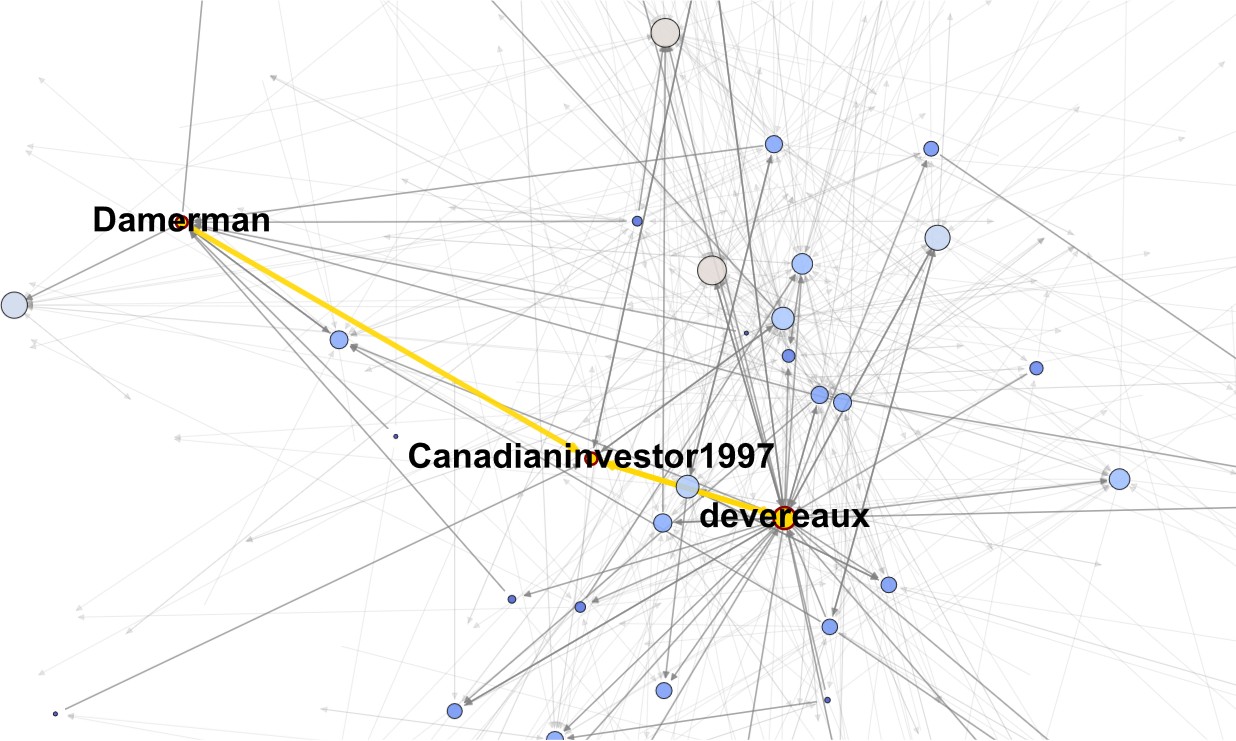
We study the relationship between investors’ social media activity and earnings announcement returns. To distinguish between information contained in peer-to-peer interaction and user-posted content, we analyze conversation networks on Reddit using centrality metrics from network science and classify user sentiment with large language models. We show that pre-announcement sentiment is positively associated with short-term cumulative abnormal returns only if it does not spark pre-announcement controversy. If pre-announcement controversy arises, we document a negative association. Our findings present a more nuanced view on the wisdom of crowds hypothesis, highlighting that peer-to-peer interaction on social media exhibits a pattern of normalization, and thus contains informational value beyond content.
Tax Competition Networks | Available upon request. | Abstract & Visual
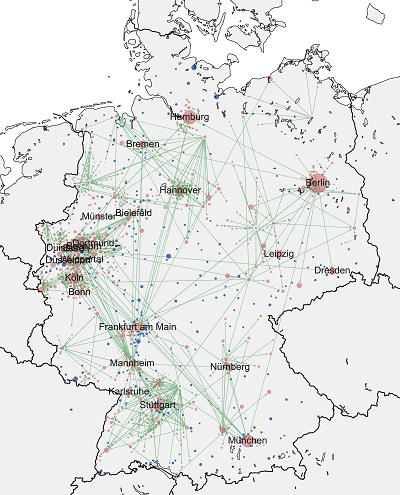
Although spatial interactions are in principle dependent on networks, the empirical literature on tax competition has thus far used matrices of generic form to model policy reactions. We address this gap in the literature in two ways. First, we analyze the arguments of local policy makers in debates on local tax reforms. We find that local politicians reference peers selectively to suit the direction of their argument. On average, their statements are in line with their political party's ideology, reflected in a preference for more equity or efficiency, respectively. However, the commonalities between the reference target and the municipality in question determine a set of references that are accepted across party lines. Second, we use this set of determinants to impute the network links as perceived by local politicians. Drawing upon a plausibly exogenous shock that affects a subset of peers, we analyze how tax reforms propagate in this network.
Third-party Reporting and the Platform Economy | Available upon request. | Abstract
This paper presents descriptive evidence on economic activity reported under DAC7, the European Union's newly introduced third-party reporting regime for online marketplaces. Using novel administrative data from Germany, we study platform-mediated sales between businesses and consumers as well as among peers. We document the scale, composition, and distribution of online marketplace participation and sales across platforms and seller types. The analysis provides a comprehensive empirical characterization of activity reported under DAC7 and establishes a baseline for future research and policy evaluation.
Teaching
Supervision of Bachelor, Master and Seminar Theses, Supervisor
Hands-On Python: An Introduction with Application Examples, Lecturer
Fundamentals of Financial Accounting, Teaching Assistant
Socially Responsible Accounting and Taxation, Guest Lecturer
Teaching Grant
Accounting & Tax Business Simulation (Computer Game)
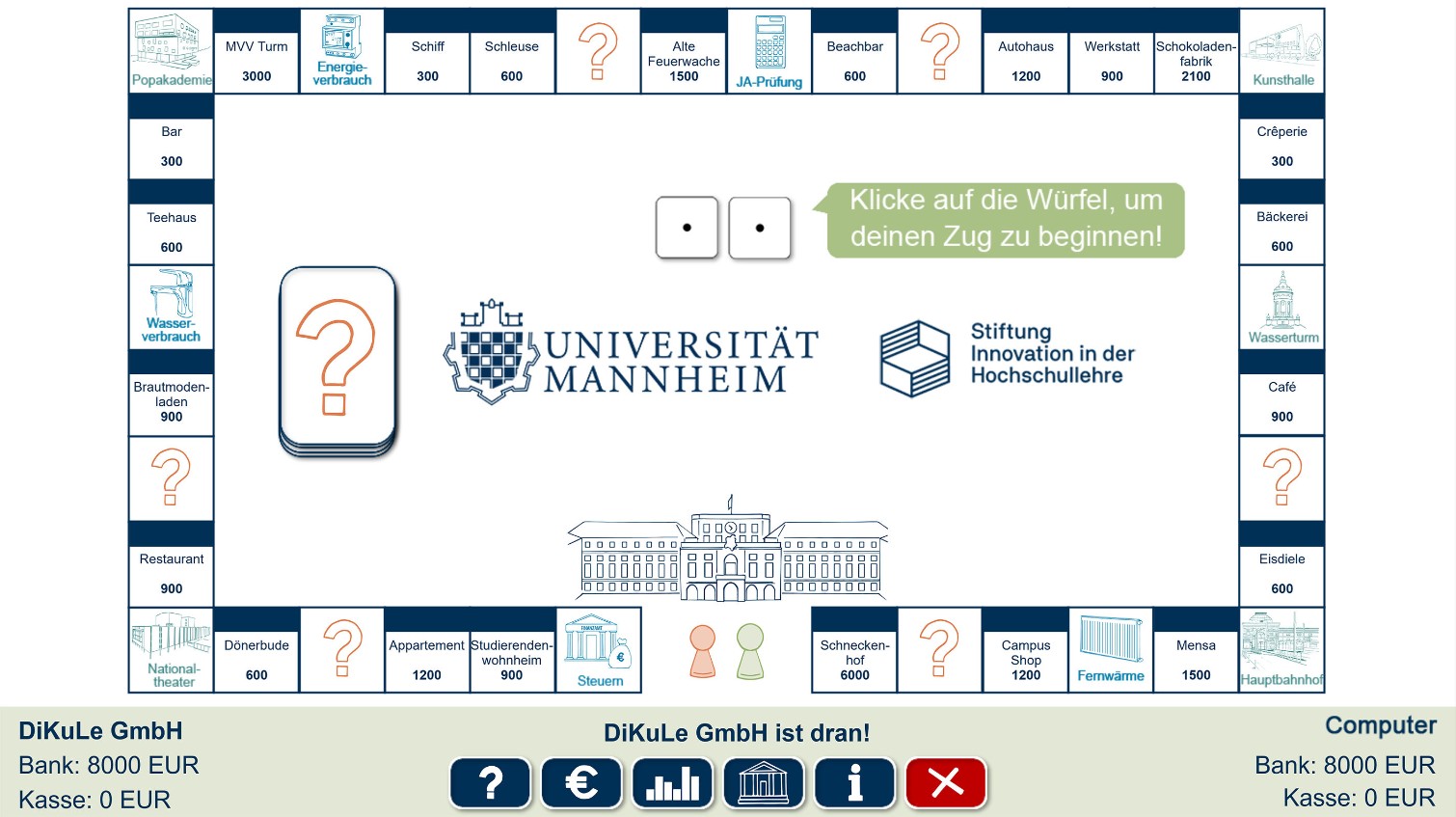
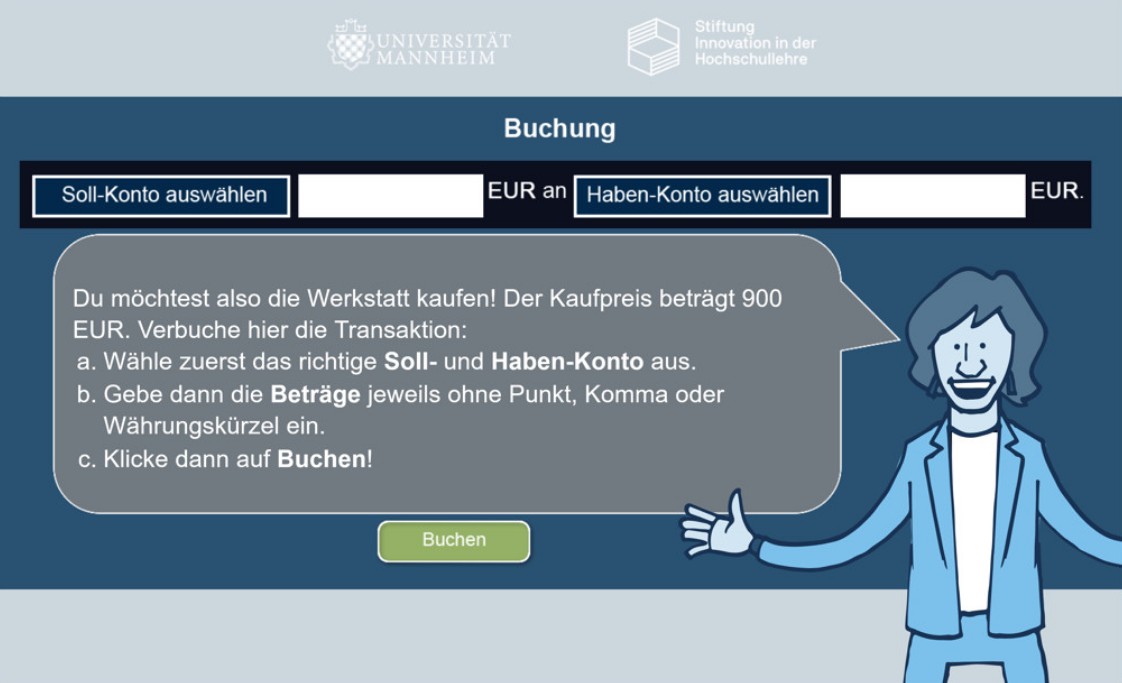
As a team, we developed an interactive, computer game-based learning module to enhance engagement and
conceptual understanding in financial accounting courses. Students play a computer opponent and take
business decisions. They are in-game incentivized to conduct correct bookkeeping. We pilot the game
in the Fundamentals of Financial Accounting course at the University of Mannheim with around 800 students
per year.
Follow this link to where the game is published CC BY-SA (4.0) (German).
We report on the creating process here (open-access, German):
Spielend lernen im digitalen Raum,
with M. Friedrich-Schieback.
die hochschullehre, 37(1), 180–187, 2026.
Entwicklung und Anwendung des Lernspiels GeR Gamified für eine BWL-Grundlagenveranstaltung,
with Andreas Reitzig, Ute Hager, Samuel Wissel, and Sabrina Navratil.
In: Marina Friedrich-Schieback, Melanie Klinger, Niko Baldus (Hg.), Freiräume für innovative digitale
Lehre: Gestaltungsprozesse, Lehrprojekte, Reflexionen.
wbv Verlag, Bielefeld, 2026.
Funded by the University of Mannheim’s Teaching Innovation Program and
Stiftung Innovation in der Hochschullehre.